

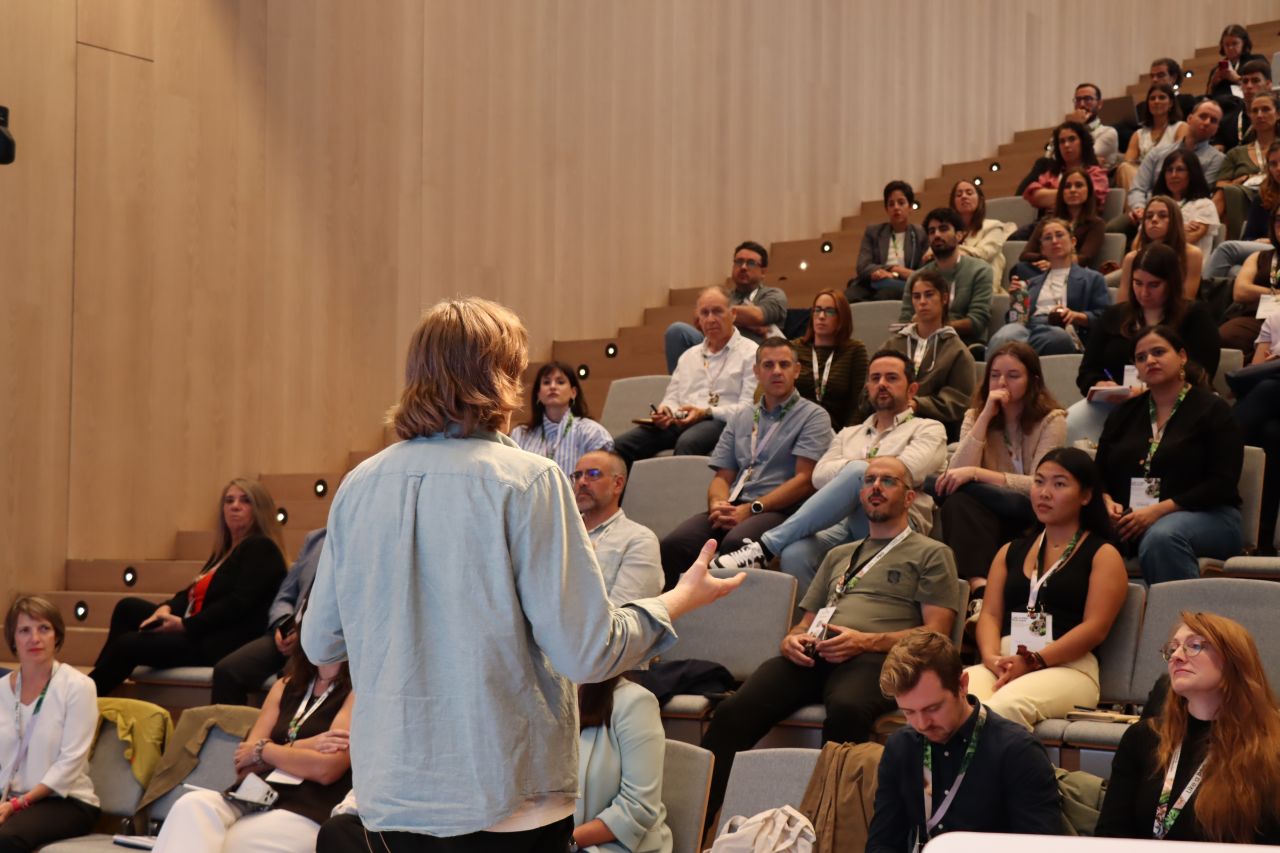
More than 120 participants from across Europe gathered in San Sebastián on 1 October for the LIKE-A-PRO final event, Beyond the Bite: Science, Scale and Acceptance of Alternative Proteins. Researchers, food companies, regulators, policymakers and innovation organisations came together to discuss how to move alternative proteins from promising innovations to products that consumers choose in everyday life.
Hosted at GOe – Gastronomy Open Ecosystem, the event offered a practical look at the opportunities and challenges facing the alternative protein sector. Discussions ranged from ingredient innovation and industrial scale-up to regulation, consumer behaviour and market adoption, highlighting the need for action across the entire value chain.
Opening the event, Morena Silvestrini, coordinator of the LIKE-A-PRO project and European Project Manager at CNTA, posed the question that framed the day's discussions: “What does it take to bring alternative proteins into the mainstream?”
The answer went beyond technical feasibility. Science, industrial scale, regulatory evidence and consumer acceptance need to progress together if alternative proteins are to achieve widespread adoption.
Ruth Álvarez Ochoa of CNTA opened the conference programme with an overview of the alternative-protein landscape in 2026, covering investment, emerging technologies, regulation, consumer shifts and market uptake. Her analysis showed an increasingly selective market, where cost, scalability, regulation and repeat purchase are becoming as important as technological novelty.
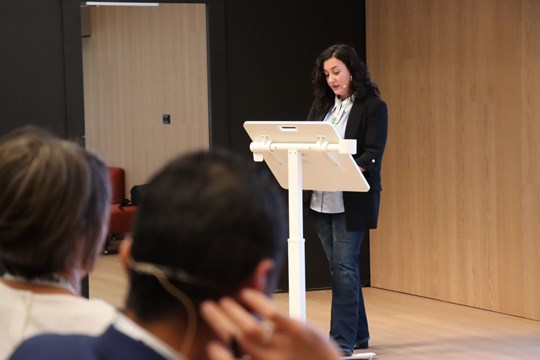
Photo: Ruth Álvarez Ochoa of CNTA giving a keynote on the global state of alternative proteins 2026.
The science sessions then focused on ingredient performance. Aylin W. Sahin from University College Cork presented approaches to improve plant-protein functionality, nutritional quality and digestibility while moving towards cleaner-label products. Dante Fratebianchi de la Parra of CNTA examined precision fermentation and microbial proteins, stressing that producing a protein is only the first step: downstream processing, functionality and performance in real food applications ultimately determine its value.
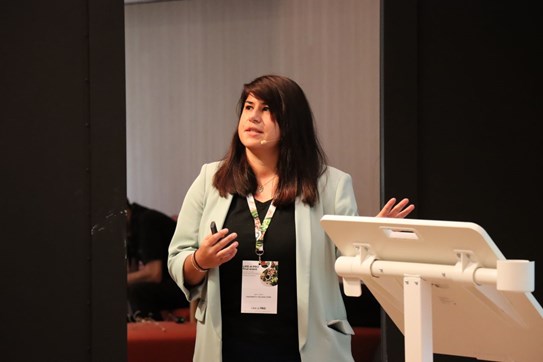
Photo: Aylin W. Sahin from University College Cork presenting on the topic of next‑generation plant proteins.
Attention then shifted to product development and industrial scale-up. Lidia Gonzalez Marcos of Heura Foods showed how consumer needs must be translated into measurable targets for taste, nutrition, convenience and value. Richard Nystad of Flowfood AS illustrated the realities of manufacturing, including process windows, variability, changeovers, yield, shelf life and cost. A recurring message was that successful scale-up often depends as much on simplification and process control as on new technology.
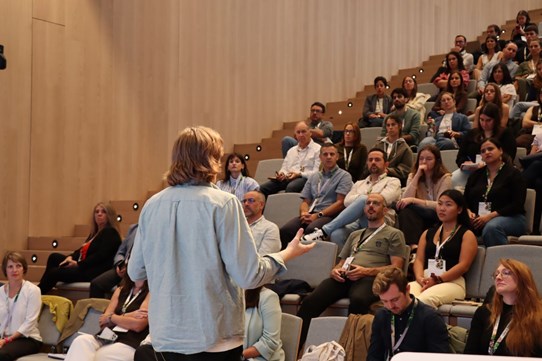
Photo: Richard Nystad of Flowfood AS shring his experience on scaling alt‑protein manufacturing.
Regulatory pathways were another major focus. Patricia Romero Fernández from EFSA explained the scientific risk-assessment process for novel foods and the support available to applicants, while Patricia Larráyoz of EATEX Food Innovation Hub presented Spain’s AgriFoodTech Sandbox as a way to generate evidence and reduce uncertainty at the regulatory frontier. A subsequent roundtable brought together EFSA, industry and regulatory consultancy perspectives, with Patricia Romero Fernández, Hannah Lester of Parima and Hannes Malfroy of Atova Regulatory Consulting discussing the importance of early dialogue and robust evidence when navigating emerging regulatory pathways.
The final session focused on consumers and market adoption. Drawing on research into food environments and behaviour, Arlind Xhelili from CSCP argued that consumers rarely make decisions based on sustainability arguments alone. Instead, alternative proteins must compete with familiar food choices on taste, convenience, availability, trust and price. The discussion continued in a roundtable with Xhelili, Martin Ranninger of ProVeg International and María Cuairán Calvo of Alimentos Sanygran, bringing together consumer, advocacy and industry perspectives on what it takes to make alternative proteins part of everyday food choices.
One message resonated across the event: encouraging consumers to try a product is not enough. Long-term adoption depends on whether products deliver a convincing experience at an acceptable price and fit naturally into existing food habits.
Summing up one of the day's strongest messages, Arlind Xhelili noted: “Mainstream is when the alternative no longer feels alternative.”
The event concluded with a networking lunch featuring products developed within LIKE-A-PRO, giving participants the opportunity to taste some of the innovations discussed during the conference while continuing conversations with project partners, industry representatives and EFSA experts.

Photo: Networking lunch featuring LIKE‑A‑PRO products
As the LIKE-A-PRO project approaches its conclusion, the discussions in San Sebastián demonstrated both the progress already made and the challenges that remain. While no single breakthrough will bring alternative proteins into the mainstream, the event revealed a growing consensus across Europe: the future of sustainable protein will depend on aligning science, industry, regulation and consumer needs around solutions that work in the real world.
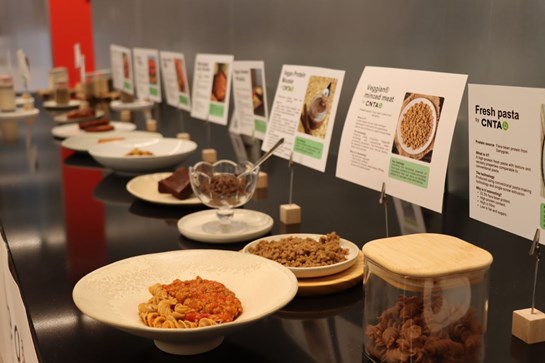
Photo: Products developed within LIKE‑A‑PRO were displayed.
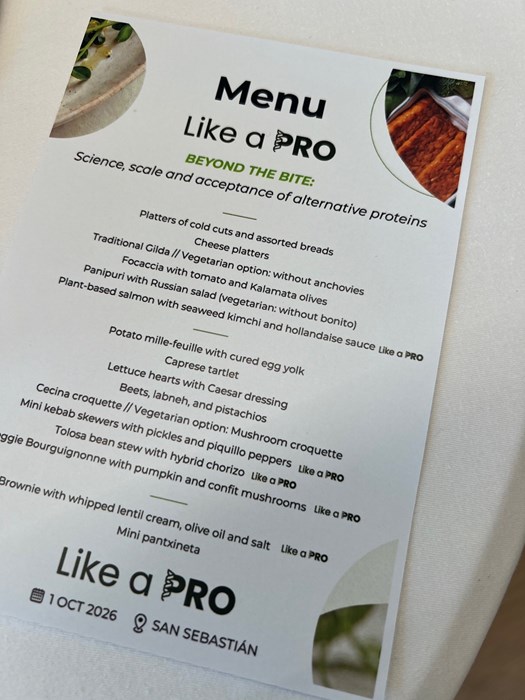
Photo: Menu for the networking lunch