

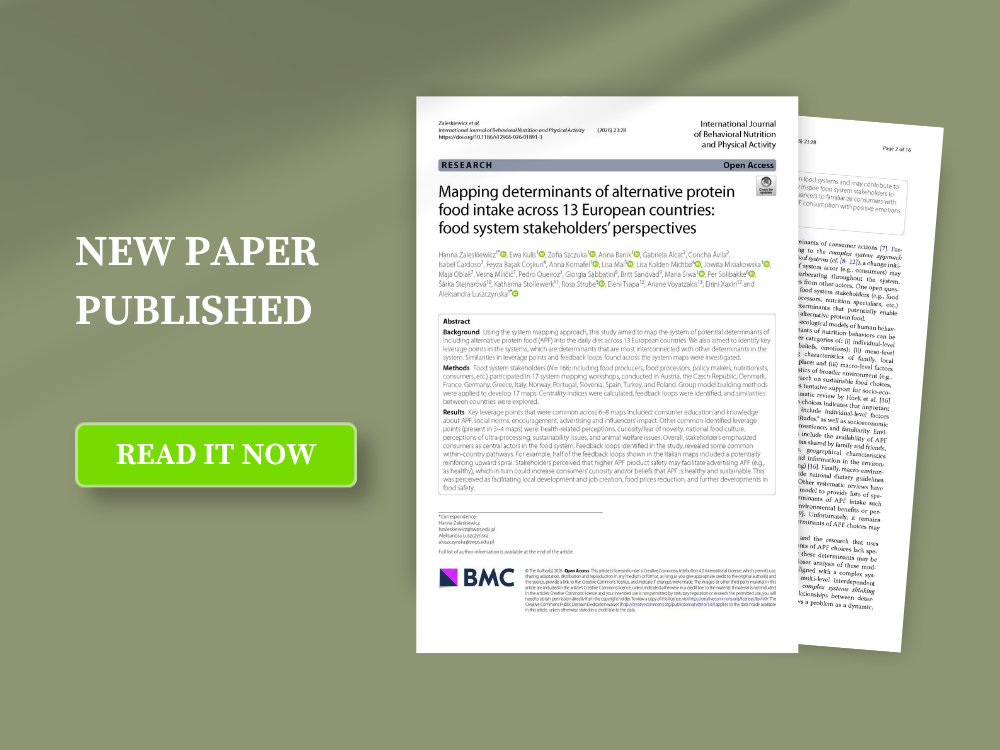
A new scientific publication from the LIKE-A-PRO project, published in the International Journal of Behavioral Nutrition and Physical Activity, explores this question by mapping the key factors influencing alternative protein consumption across 13 European countries.
The study highlights that adoption is shaped by a complex interplay of factors across the entire food system, not just individual preferences. These include:
Capability - such as knowledge, skills, and familiarity with alternative proteins
Opportunity - including availability, affordability, and food environments
Motivation - such as attitudes, perceptions, and social norms
Importantly, the findings show that barriers and enablers differ depending on the type of protein (e.g. plant-based, insect-based, or fungi-based), as well as across different population groups and regional contexts.