

How do you make alternative proteins part of everyday eating? LIKE-A-PRO has published nine new factsheets with practical answers, drawn from Living Labs involving 3,729 consumers in 11 European countries.
Five factsheets present insights from the Living Labs, and four describe real-world pilots that put those insights to the test.
Choice editing: Consumers responded more positively to gradual changes and attractive alternatives than to sudden restrictions. Acceptance depends on understanding why changes are made and seeing them as fair and affordable.
Choice expansion: People are more willing to try and keep choosing alternative proteins when they fit familiar meals, taste good, and are convenient, accessible and backed by trustworthy information.
Choice environment: Visibility, convenient placement and treating alternative proteins as a normal part of everyday food settings encourage trial. Clear labels help people make informed decisions.
Beyond choice: Simple, positive communication, tastings, preparation guidance and trusted voices help build knowledge, trust and confidence.
Practical learnings: Lessons on running inclusive Living Labs, from recruiting diverse participants through trusted local partners to reporting outcomes back to those who took part.
Choice editing pilot (university canteen): Gradually reducing meat-based dishes and raising the visibility of plant-based and alternative protein meals increased awareness substantially, and many canteen users chose plant-based meals. Some consumers, however, perceived the intervention as restrictive.
Choice environment pilot (LABe, Spain, and Bar Amelia, Belgium): Alternative protein dishes performed better when integrated into the regular menu than when placed in a separate vegetarian or vegan section. Sensory, appealing descriptions also helped.
Choice expansion pilot (three Coop supermarkets, Norway): Prominent placement, discounts, signage and tastings for Veggie Burger and Veggie Falafel led to a strong increase in sales. Repeat purchase remained a challenge.
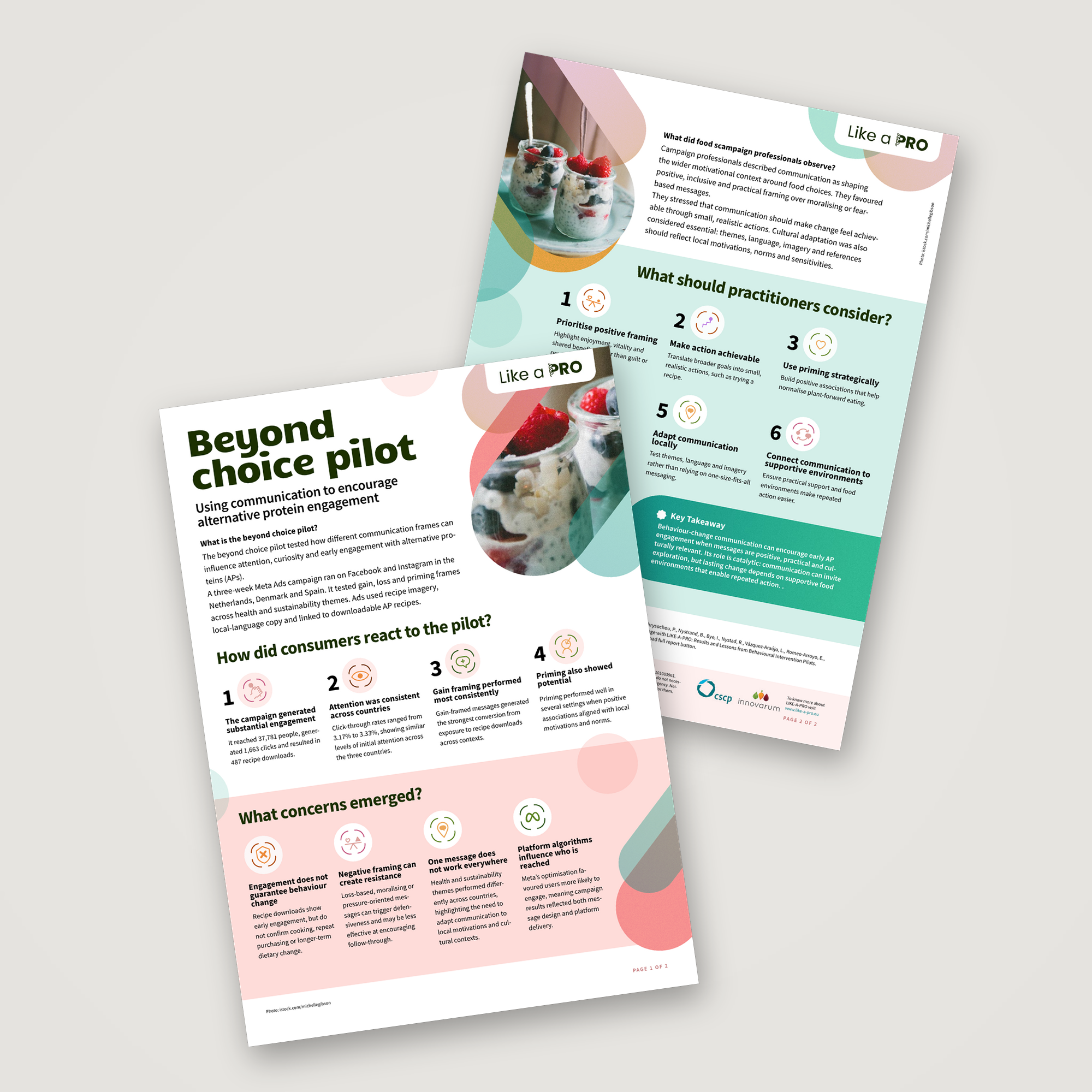
Beyond choice pilot (the Netherlands, Denmark and Spain): A three-week social media campaign reached more than 37,000 people, generated 1,663 clicks and led to 487 recipe downloads. Positive, gain-framed messages performed most consistently, while pressure-based messages could create resistance.
Together, the factsheets point in the same direction: changes to the food environment can influence behaviour, but lasting change needs appealing products, positive and locally relevant communication, transparency and continued consumer choice. For retailers, caterers, producers, communicators and policymakers, they offer evidence-based guidance for making alternative proteins easier to notice, try and choose.